


Systematically reducing energy costs is the best way for businesses to keep expenditure low and under control. Energy audits and energy management systems are helpful in this regard; these will become mandatory under the EU Energy Efficiency Directive (EU) 2023/1791 for companies with a total energy consumption above a certain threshold.
Period: June 2026
In addition to the economic benefits, Energy Efficiency is also becoming increasingly important from a regulatory perspective. The revised EU Energy Efficiency Directive no longer focuses on company size, but on actual energy consumption. As a result, companies that have not previously been required to carry out an energy audit or establish an energy management system may also be subject to legal obligations in future.
New requirements based on energy consumption
The current version of the EU Energy Efficiency Directive sets out the following thresholds:
- Businesses with an average annual energy consumption > 10 TJ (= ~2,8 GWh) over the last three years are required to carry out an energy audit every four years (unless an energy management system has already been implemented).
- Businesses with an average annual energy consumption > 85 TJ (= ~23,6 GWh) over the last three years are required to establish an energy management system.
If a company has a certified environmental management system that includes an energy audit meeting the requirements of the Directive, the obligations regarding the energy audit or energy management system may be waived.
Check Your Consumption, Take a Chance
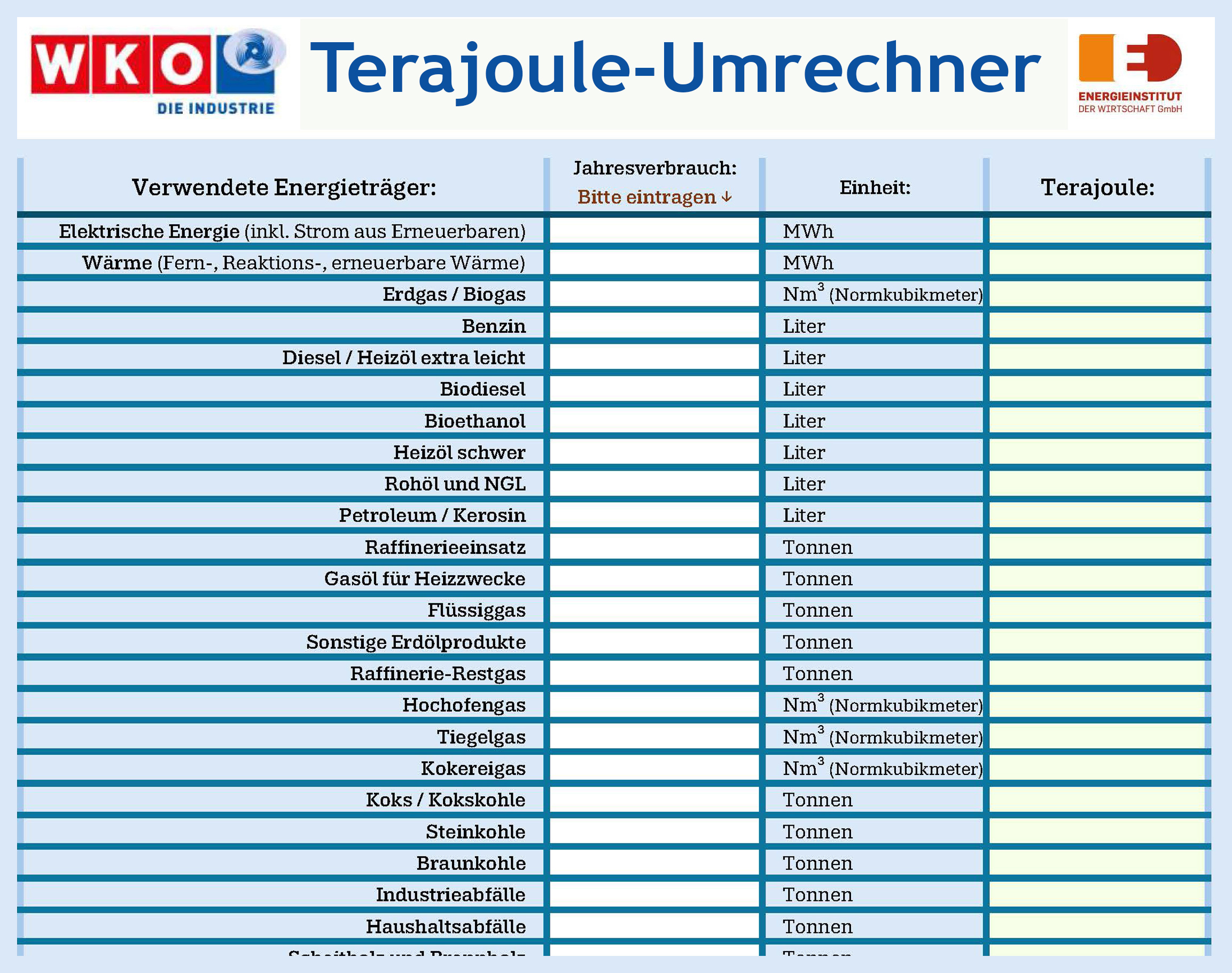
The annual energy consumption to be calculated covers all forms of energy – electricity and heat as well as fuels for transport. To enable businesses to check their total consumption quickly and easily, the Energy Institute for Businesses has developed a terajoule converter on behalf of the Austrian Federal Economic Chamber’s Industry Division. This excel tool (by now available in German, translated versions will follow) allows for the quick and easy conversion of common units – from kilowatt-hours of electricity and standard cubic metres of gas to litres of petrol – into the required standard unit of terajoules and sums up the total annual consumption.
Addressing energy efficiency at an early stage provides planning certainty, avoids time pressure and, at the same time, opens up attractive potential for savings. Energy efficiency is therefore not only a regulatory requirement, but above all an opportunity to reduce costs, strengthen competitiveness and operate sustainably.
The current EU LIFE project EcoSMEnergy, in which the EIW is participating as Austrian partner, also explores the potential of energy management.